Namespaces | |
| namespace | anonymous_namespace{tweak-view.cc} |
| namespace | Detail |
Classes | |
| class | Base |
| class | Context |
| class | Count |
| class | Counted |
| class | Counter |
| class | ITweakPositionTextBox |
| class | ITweakPresentationPosition |
| class | ITweakRulers |
| class | ITweakSelection |
| class | Observable |
| class | on_scope_exit |
| class | optional_cleanup |
| class | ParentContext |
| class | Point |
| class | ProgressInterfaceBroadcaster |
| class | ProgressInterfaceFromProgressStateInterface |
| class | ProgressInterfaceFromProgressStateInterfaceForwarder |
| class | ProgressInterfaceMultiplexer |
| class | ProgressStateInterface |
| class | ProgressStateInterfaceFromProgressInterface |
| class | ProgressStateInterfaceFromProgressInterfaceForwarder |
| class | Rectangle |
| class | RecursiveContext |
| class | Segment |
| class | SingleContext |
| class | TweakGridSelection |
| class | TweakPixelSelection |
| class | TweakPositionTextBox |
| class | TweakPresentationPosition |
| class | TweakRulers |
| class | TweakSelection |
Typedefs | |
| using | Stuff = std::shared_ptr< void > |
| using | StuffWeak = std::weak_ptr< void > |
| using | StuffList = std::list< Stuff > |
| template<typename K , typename V > | |
| using | WeakKeyMap = std::map< K, V, std::owner_less< K > > |
| template<typename K > | |
| using | WeakKeySet = std::set< K, std::owner_less< K > > |
Functions | |
| ITweakPresentationPosition::Ptr | getDefaultTweakPresentationPosition () |
| ITweakRulers::Ptr | getDefaultTweakRulers () |
| ITweakSelection::Ptr | getDefaultTweakSelection () |
| ITweakSelection::Map | getDefaultTweakSelectionMap () |
| ITweakPositionTextBox::Ptr | getDefaultTweakPositionTextBox () |
| template<typename T > | |
| T | get (const Context::ConstPtr &context, std::string name) |
| template<typename T > | |
| T | get (const Context::ConstPtr &context) |
| template<typename T > | |
| std::optional< T > | try_get (const Context::ConstPtr &context, std::string name) |
| template<typename T > | |
| std::optional< T > | try_get (const Context::ConstPtr &context) |
| template<typename T , typename Callable > | |
| auto | get_or (const Context::ConstPtr &context, std::string name, const Callable &default_value) -> std::enable_if_t< std::is_same_v< T, std::remove_reference_t< decltype(default_value())> >, T > |
| template<typename T , typename Callable > | |
| auto | get_or (const Context::ConstPtr &context, const Callable &default_value) -> std::enable_if_t< std::is_same_v< T, std::remove_reference_t< decltype(default_value())> >, T > |
| template<typename T > | |
| T | get_or (const Context::ConstPtr &context, std::string name, T default_value) |
| template<typename T > | |
| T | get_or (const Context::ConstPtr &context, T default_value) |
| template<typename T > | |
| void | set (const Context::Ptr &context, std::string name, T value) |
| template<typename T > | |
| void | set (const Context::Ptr &context, T value) |
| template<typename Callable > | |
| void | setFactory (const Context::Ptr &context, std::string name, Callable value) |
| template<typename Callable > | |
| void | setFactory (const Context::Ptr &context, Callable value) |
| template<typename T > | |
| bool | isZero (T v) |
| template<> | |
| bool | isZero< int > (int v) |
| template<> | |
| bool | isZero< double > (double v) |
| template<typename T > | |
| bool | areEqual (T a, T b) |
| template<typename T > | |
| Segment< T > | make_segment (T start, T size) |
| template<typename T > | |
| Segment< T > | make_segment_from_start_end (T start, T end) |
| template<typename T > | |
| std::ostream & | operator<< (std::ostream &os, const Segment< T > &s) |
| Segment< double > | roundOutward (Segment< double > s) |
| template<typename T > | |
| T | center (Segment< T > s) |
| template<typename T > | |
| Point< T > | make_point (T x, T y) |
| template<typename T > | |
| Point< T > | make_point (T c) |
| template<typename T > | |
| std::ostream & | operator<< (std::ostream &os, const Point< T > &p) |
| template<typename T , typename U > | |
| Point< std::common_type_t< T, U > > | operator- (Point< T > left, Point< U > right) |
| template<typename T , typename U > | |
| Point< std::common_type_t< T, U > > | operator+ (Point< T > left, Point< U > right) |
| template<typename T , typename U > | |
| Point< std::common_type_t< T, U > > | operator* (Point< T > left, Point< U > right) |
| template<typename T , typename U > | |
| Point< std::common_type_t< T, U > > | operator/ (Point< T > left, Point< U > right) |
| template<typename T , typename U > | |
| Point< std::common_type_t< T, U > > | operator/ (T left, Point< U > right) |
| template<typename T , typename U > | |
| Point< std::common_type_t< T, U > > | operator/ (Point< T > left, U right) |
| template<typename T > | |
| Point< T > | rounded_divide_by (Point< T > value, T factor) |
| template<typename T > | |
| Point< T > | ceiled_divide_by (Point< T > value, T factor) |
| template<typename T > | |
| Point< T > | floored_divide_by (Point< T > value, T factor) |
| template<typename T > | |
| Point< T > | rounded_divide_by (Point< T > value, Point< T > factor) |
| template<typename T > | |
| Point< T > | ceiled_divide_by (Point< T > value, Point< T > factor) |
| template<typename T > | |
| Point< T > | floored_divide_by (Point< T > value, Point< T > factor) |
| template<typename T > | |
| Point< T > | ceil (Point< T > p) |
| template<typename T > | |
| Rectangle< T > | make_rect (T x, T y, T width, T height) |
| template<typename T > | |
| Rectangle< T > | make_rect (Point< T > position, Point< T > size) |
| template<typename T > | |
| Rectangle< T > | make_rect_from_start_end (Point< T > start, Point< T > end) |
| template<typename T > | |
| std::ostream & | operator<< (std::ostream &os, const Rectangle< T > &r) |
| std::ostream & | operator<< (std::ostream &os, const cairo_rectangle_int_t &r) |
| template<typename T , typename U > | |
| Rectangle< std::common_type_t< T, U > > | operator* (Rectangle< T > left, U right) |
| template<typename T , typename U > | |
| Rectangle< std::common_type_t< T, U > > | operator* (T left, Rectangle< U > right) |
| Rectangle< double > | operator* (cairo_rectangle_int_t const &r, Point< double > const &p) |
| Rectangle< double > | operator* (Point< double > const &p, cairo_rectangle_int_t const &r) |
| template<typename T , typename U > | |
| Rectangle< std::common_type_t< T, U > > | operator- (Rectangle< T > left, Point< U > right) |
| Rectangle< double > | roundOutward (Rectangle< double > r) |
| Rectangle< double > | roundCorners (Rectangle< double > r) |
| template<typename T > | |
| Point< T > | center (Rectangle< T > r) |
| Stuff | Empty () |
| template<typename F > | |
| std::shared_ptr< void > | on_destruction (F f) |
| std::shared_ptr< unsigned char > | shared_malloc (size_t size) |
| void | dumpCounts () |
Variables | |
| constexpr double | epsilon = 1e-6 |
Typedef Documentation
◆ Stuff
| using Scroom::Utils::Stuff = typedef std::shared_ptr<void> |
Stuff is a pointer to some private data.
◆ StuffList
| using Scroom::Utils::StuffList = typedef std::list<Stuff> |
◆ StuffWeak
| using Scroom::Utils::StuffWeak = typedef std::weak_ptr<void> |
◆ WeakKeyMap
| using Scroom::Utils::WeakKeyMap = typedef std::map<K, V, std::owner_less<K> > |
◆ WeakKeySet
| using Scroom::Utils::WeakKeySet = typedef std::set<K, std::owner_less<K> > |
Function Documentation
◆ areEqual()
| bool Scroom::Utils::areEqual | ( | T | a, |
| T | b | ||
| ) |
Referenced by Scroom::Utils::Segment< T >::operator==().


◆ ceil()
Referenced by ceil().
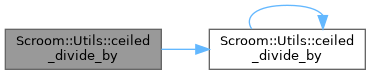
◆ ceiled_divide_by() [1/2]
| Point< T > Scroom::Utils::ceiled_divide_by | ( | Point< T > | value, |
| Point< T > | factor | ||
| ) |
◆ ceiled_divide_by() [2/2]
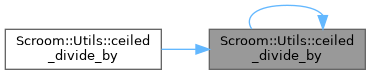
Referenced by ceiled_divide_by(), and ceiled_divide_by().
◆ center() [1/2]
◆ center() [2/2]
| T Scroom::Utils::center | ( | Segment< T > | s | ) |
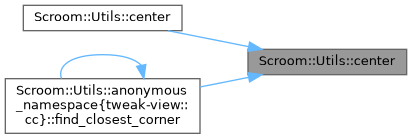
Referenced by center(), and Scroom::Utils::anonymous_namespace{tweak-view.cc}::find_closest_corner().
◆ dumpCounts()
| void Scroom::Utils::dumpCounts | ( | ) |

◆ Empty()
|
inline |
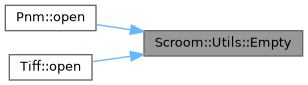
Referenced by Pnm::open(), and Tiff::open().
◆ floored_divide_by() [1/2]
| Point< T > Scroom::Utils::floored_divide_by | ( | Point< T > | value, |
| Point< T > | factor | ||
| ) |

◆ floored_divide_by() [2/2]
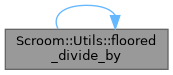
Referenced by floored_divide_by(), and floored_divide_by().

◆ get() [1/2]
| T Scroom::Utils::get | ( | const Context::ConstPtr & | context | ) |
◆ get() [2/2]
| T Scroom::Utils::get | ( | const Context::ConstPtr & | context, |
| std::string | name | ||
| ) |
◆ get_or() [1/4]
| auto Scroom::Utils::get_or | ( | const Context::ConstPtr & | context, |
| const Callable & | default_value | ||
| ) | -> std::enable_if_t<std::is_same_v<T, std::remove_reference_t<decltype(default_value())>>, T> |
◆ get_or() [2/4]
| auto Scroom::Utils::get_or | ( | const Context::ConstPtr & | context, |
| std::string | name, | ||
| const Callable & | default_value | ||
| ) | -> std::enable_if_t<std::is_same_v<T, std::remove_reference_t<decltype(default_value())>>, T> |
◆ get_or() [3/4]
| T Scroom::Utils::get_or | ( | const Context::ConstPtr & | context, |
| std::string | name, | ||
| T | default_value | ||
| ) |
◆ get_or() [4/4]
| T Scroom::Utils::get_or | ( | const Context::ConstPtr & | context, |
| T | default_value | ||
| ) |
◆ getDefaultTweakPositionTextBox()
| ITweakPositionTextBox::Ptr Scroom::Utils::getDefaultTweakPositionTextBox | ( | ) |

◆ getDefaultTweakPresentationPosition()
| ITweakPresentationPosition::Ptr Scroom::Utils::getDefaultTweakPresentationPosition | ( | ) |
◆ getDefaultTweakRulers()
| ITweakRulers::Ptr Scroom::Utils::getDefaultTweakRulers | ( | ) |

◆ getDefaultTweakSelection()
| ITweakSelection::Ptr Scroom::Utils::getDefaultTweakSelection | ( | ) |
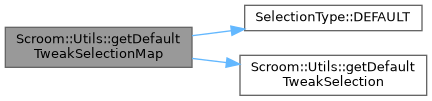
Referenced by getDefaultTweakSelectionMap().

◆ getDefaultTweakSelectionMap()
| ITweakSelection::Map Scroom::Utils::getDefaultTweakSelectionMap | ( | ) |
◆ isZero()
| bool Scroom::Utils::isZero | ( | T | v | ) |
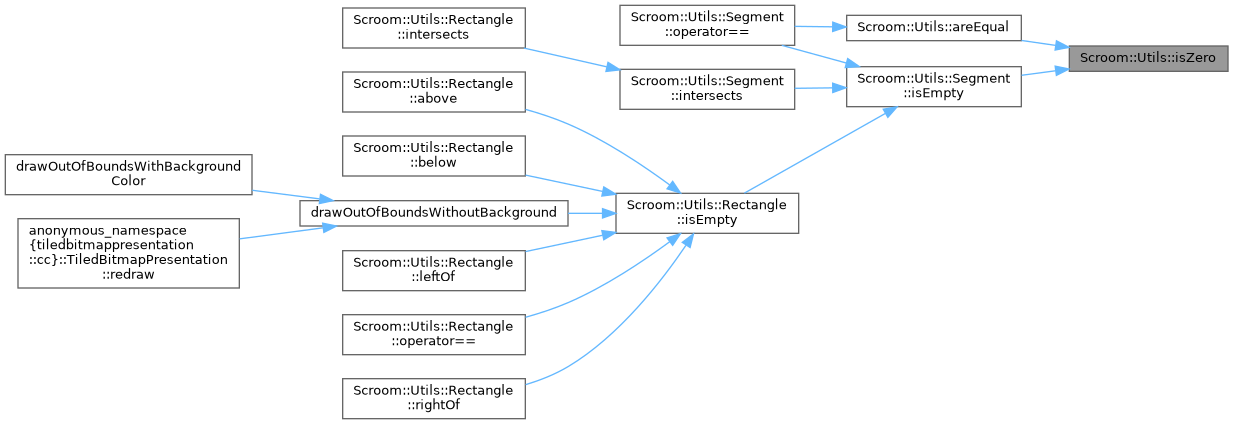
Referenced by areEqual(), and Scroom::Utils::Segment< T >::isEmpty().
◆ isZero< double >()
|
inline |
◆ isZero< int >()
|
inline |
◆ make_point() [1/2]
| Point< T > Scroom::Utils::make_point | ( | T | c | ) |
◆ make_point() [2/2]
| Point< T > Scroom::Utils::make_point | ( | T | x, |
| T | y | ||
| ) |
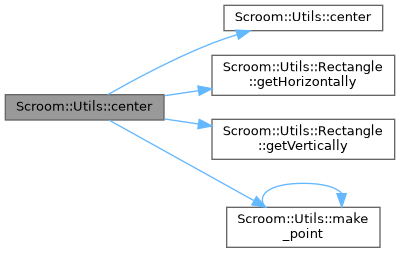
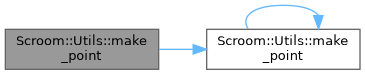
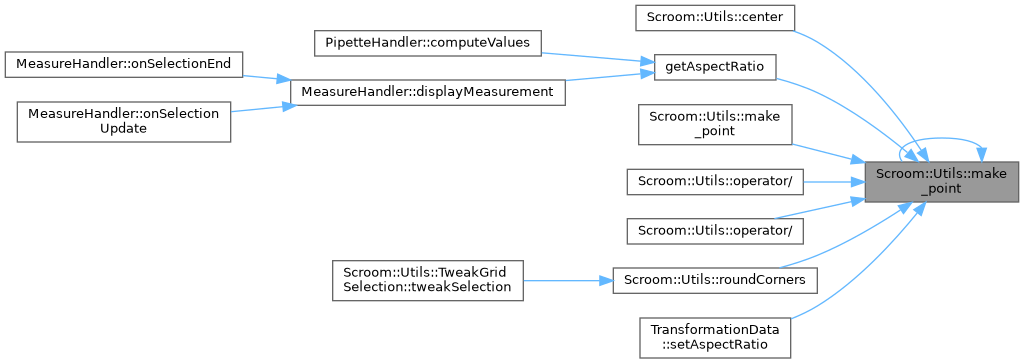
Referenced by center(), getAspectRatio(), make_point(), make_point(), operator/(), operator/(), roundCorners(), and TransformationData::setAspectRatio().
◆ make_rect() [1/2]
| Rectangle< T > Scroom::Utils::make_rect | ( | Point< T > | position, |
| Point< T > | size | ||
| ) |

◆ make_rect() [2/2]
| Rectangle< T > Scroom::Utils::make_rect | ( | T | x, |
| T | y, | ||
| T | width, | ||
| T | height | ||
| ) |
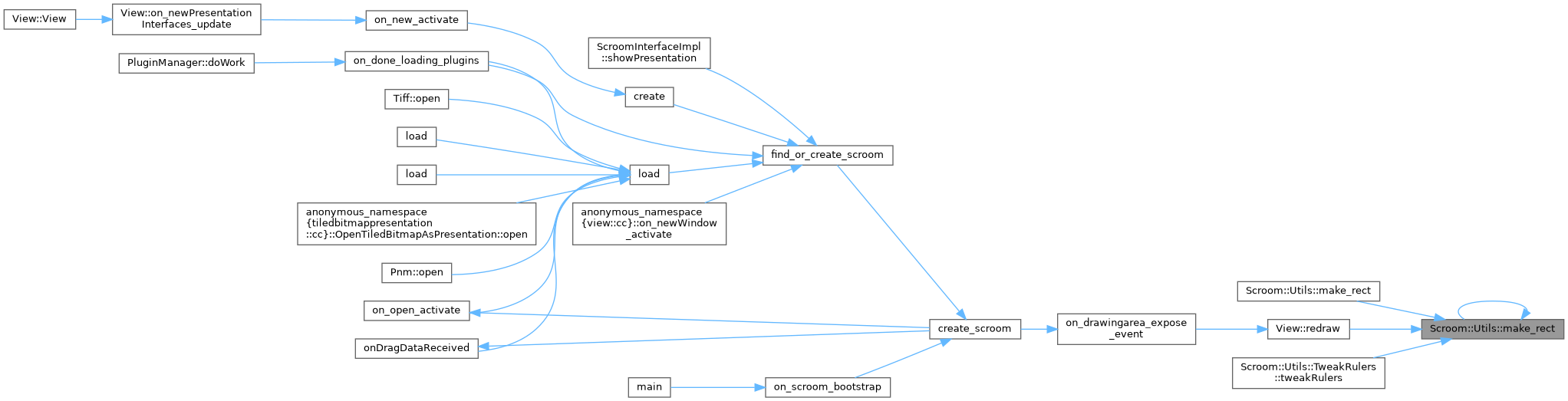
Referenced by make_rect(), make_rect(), View::redraw(), and Scroom::Utils::TweakRulers::tweakRulers().
◆ make_rect_from_start_end()
| Rectangle< T > Scroom::Utils::make_rect_from_start_end | ( | Point< T > | start, |
| Point< T > | end | ||
| ) |
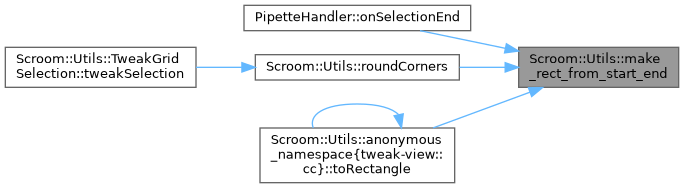
Referenced by PipetteHandler::onSelectionEnd(), roundCorners(), and Scroom::Utils::anonymous_namespace{tweak-view.cc}::toRectangle().

◆ make_segment()
| Segment< T > Scroom::Utils::make_segment | ( | T | start, |
| T | size | ||
| ) |
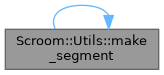
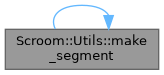
Referenced by make_segment().
◆ make_segment_from_start_end()
| Segment< T > Scroom::Utils::make_segment_from_start_end | ( | T | start, |
| T | end | ||
| ) |
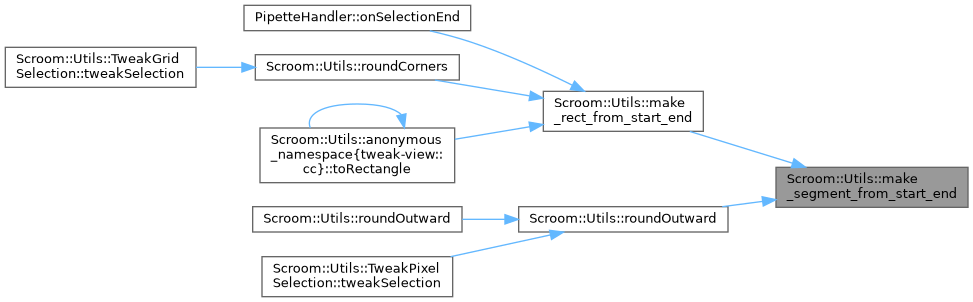
Referenced by make_rect_from_start_end(), and roundOutward().
◆ on_destruction()
| std::shared_ptr< void > Scroom::Utils::on_destruction | ( | F | f | ) |
Referenced by Scroom::TiledBitmap::scheduleLoadingBitmap().

◆ operator*() [1/5]
|
inline |
◆ operator*() [2/5]
|
inline |
◆ operator*() [3/5]
◆ operator*() [4/5]
| Rectangle< std::common_type_t< T, U > > Scroom::Utils::operator* | ( | Rectangle< T > | left, |
| U | right | ||
| ) |
◆ operator*() [5/5]
| Rectangle< std::common_type_t< T, U > > Scroom::Utils::operator* | ( | T | left, |
| Rectangle< U > | right | ||
| ) |
◆ operator+()
◆ operator-() [1/2]
◆ operator-() [2/2]
| Rectangle< std::common_type_t< T, U > > Scroom::Utils::operator- | ( | Rectangle< T > | left, |
| Point< U > | right | ||
| ) |
◆ operator/() [1/3]
◆ operator/() [2/3]

◆ operator/() [3/3]

◆ operator<<() [1/4]
|
inline |
◆ operator<<() [2/4]
| std::ostream & Scroom::Utils::operator<< | ( | std::ostream & | os, |
| const Point< T > & | p | ||
| ) |
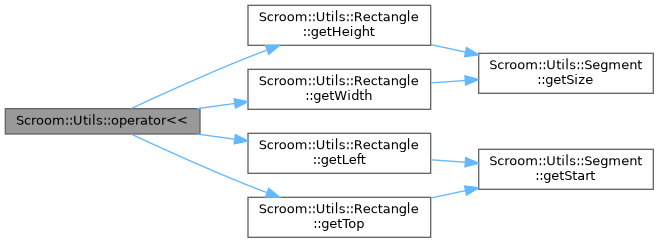
◆ operator<<() [3/4]
| std::ostream & Scroom::Utils::operator<< | ( | std::ostream & | os, |
| const Rectangle< T > & | r | ||
| ) |
◆ operator<<() [4/4]
| std::ostream & Scroom::Utils::operator<< | ( | std::ostream & | os, |
| const Segment< T > & | s | ||
| ) |
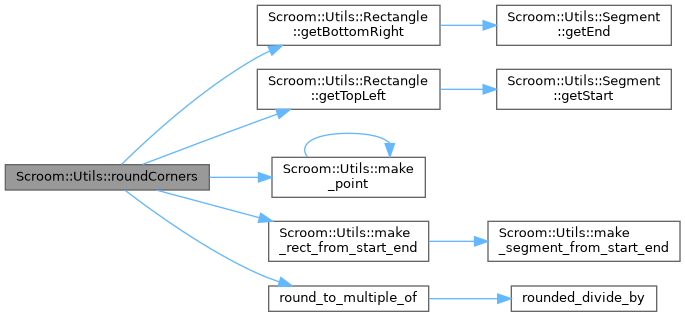
◆ roundCorners()
Referenced by Scroom::Utils::TweakGridSelection::tweakSelection().

◆ rounded_divide_by() [1/2]
| Point< T > Scroom::Utils::rounded_divide_by | ( | Point< T > | value, |
| Point< T > | factor | ||
| ) |

◆ rounded_divide_by() [2/2]
Referenced by rounded_divide_by(), and rounded_divide_by().

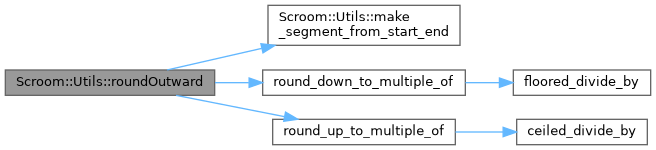
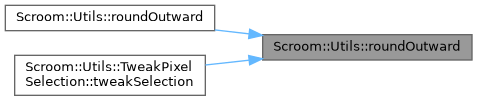
◆ roundOutward() [1/2]
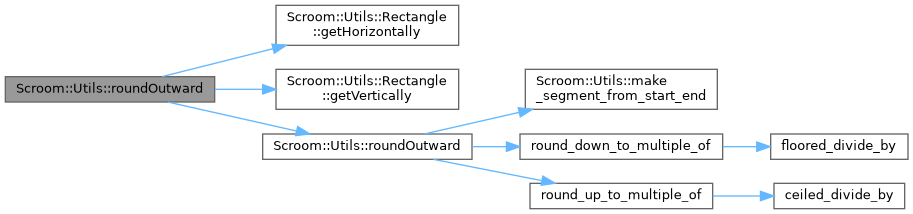
◆ roundOutward() [2/2]
Referenced by roundOutward(), and Scroom::Utils::TweakPixelSelection::tweakSelection().
◆ set() [1/2]
| void Scroom::Utils::set | ( | const Context::Ptr & | context, |
| std::string | name, | ||
| T | value | ||
| ) |

◆ set() [2/2]
| void Scroom::Utils::set | ( | const Context::Ptr & | context, |
| T | value | ||
| ) |

◆ setFactory() [1/2]
| void Scroom::Utils::setFactory | ( | const Context::Ptr & | context, |
| Callable | value | ||
| ) |

◆ setFactory() [2/2]
| void Scroom::Utils::setFactory | ( | const Context::Ptr & | context, |
| std::string | name, | ||
| Callable | value | ||
| ) |
Referenced by setFactory().


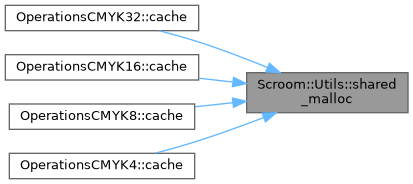
◆ shared_malloc()
|
inline |
Referenced by OperationsCMYK32::cache(), OperationsCMYK16::cache(), OperationsCMYK8::cache(), and OperationsCMYK4::cache().
◆ try_get() [1/2]
| std::optional< T > Scroom::Utils::try_get | ( | const Context::ConstPtr & | context | ) |
◆ try_get() [2/2]
| std::optional< T > Scroom::Utils::try_get | ( | const Context::ConstPtr & | context, |
| std::string | name | ||
| ) |
Variable Documentation
◆ epsilon
|
constexpr |
Referenced by isZero< double >().